


Disclaimer: The opinions expressed here are that of the writer and do not necessarily represent the views of the Union for Traditional Judaism, unless otherwise indicated.
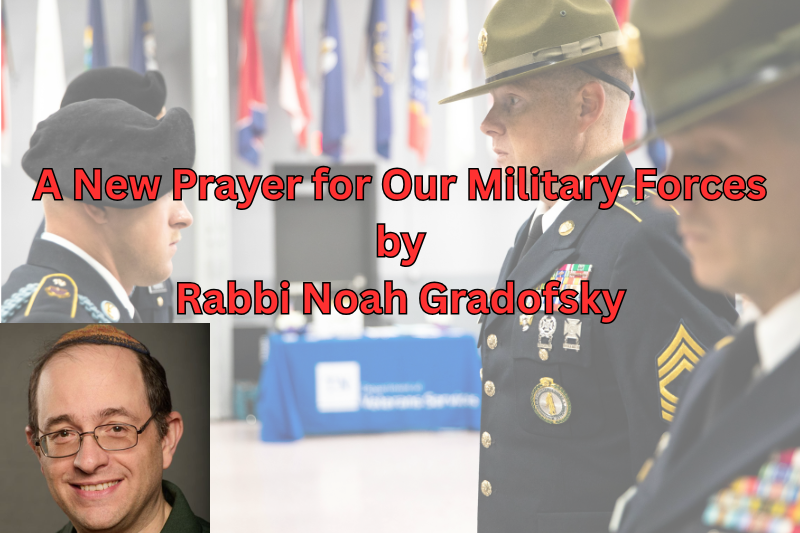
Each Shabbat, many congregations recite prayers for certain armed forces. In Israel, there is a prayer for the Israel Defense Force (IDF, צה”ל) and other security services. Outside of Israel, there is often both the prayer for the IDF and for the local government’s military.
These prayers ask for God’s blessing in a variety of sensible areas, such as military victory, safety of the forces, and the blessing of allowing those forces to return home.
Recently I realized (and I must admit my embarrassment that this is only a recent realization) that there is something missing from these prayers. These prayers make no mention of a hope that these armed forces carry out their missions in a just and honorable manner.
That military actions ought to be carried out in the most just manner possible is by definition true, even as we might debate exactly what we mean by “most just.” Arguably, these concerns are a double-edged sword, as compassion for the enemy or for collateral damage might place us or our military forces in danger. Importantly, though, there are strong arguments that concerns for enemy combatants or collateral damage might make us and our forces more safe. See, for example, “Pete Hegseth Is Doing Something Even Worse Than Breaking the Law” by conservative columnist and former JAG officer David French (gift link).
Laws of war are, of course, an institution reflected in our Torah, for example, the requirement of providing an opportunity for an enemy to surrender and restrictions on who may be killed at Deut. 20:10-18 and the rules concerning the war bride at Deut. 21:10-14. Although modern laws of war go far beyond those Torah requirements, clearly many of these modern laws of war are improvements on the Torah’s limited guidance. After all, it is well accepted that the Torah often creates a moral floor and not a ceiling (see e.g. the concepts of acting לפנים משורת הדין beyond the boundaries of the law and considerations for the possibility of one being a נבל ברשות התורה scoundrel with the permission of the Torah).
This past Shabbat we read of Jacob’s encounter with his brother Esav years after Jacob tricked his father Isaac into giving Jacob a blessing intended for Esav. Prior to Jacob’s encounter with Esav, we are told “וַיִּירָ֧א יַעֲקֹ֛ב מְאֹ֖ד וַיֵּ֣צֶר ל֑וֹ Jacob feared greatly and was troubled” (Gen. 32:8). In Bereshit Rabbah (76:2, cited by Rashi on Gen. 32:8) Rabbi Judah son of Ilai, noting the apparent redundancy, explains that Jacob “feared greatly” lest he kill Esav, while Jacob was troubled lest he be killed. Poignantly, based on the order of the verse as well as the word choice, this construction of the verse suggests that Jacob was more troubled by the possibility that he might be forced to kill Esav than he was at the possibility that Esav might kill him.[1]
Admittedly, my concern in this regard was spurred by recent questions revolving around the United States Armed Forces follow-up attack on survivors of a recent attack on an alleged drug boat. But history is replete with examples of otherwise justified military actions being marred by inhumane actions of some members of military forces. Given the exigencies of military actions, it would be surprising if any significant military actions did not result in at least some moral failures. Therefore, it seems to me that any time we voice rightful concern for the wellbeing of our military forces we ought to take at least a moment to express concern for others who might unjustly be affected by the actions of those military forces who act on our behalf.
I suggest adding, for example, the phrase הדריכם לעשות חובותיהם בצדק ובמשפט guide them to perform their duties with justice and righteousness to our prayers for the military.
For the prayer for the IDF, I suggest placing this addition immediately before the phrase praying for fulfilment of the scriptural promise of God’s fighting our battles, so that the military’s righteousness becomes a justification for God’s support (see example below). For other prayers for military forces, I suggest that if the prayer refers to a prayer for the safe return of soldiers (e.g. in the prayer found in the Koren Siddur השיבם בשלום אל ביתם return them in peace to their homes), my proposed phrase should be added immediately before that prayer, since witnessing a colleague’s unjust act or, worse yet, realizing that one’s own actions may have fallen short morally, may cause trauma that remains with the soldier well after the return home.
Making a change to our public liturgy would be particularly effective in expressing this thought as a matter of critical communal concern. However, where public liturgical change is not possible, I would still encourage individuals to reflect on these values during the recitation of prayers for the military.
May God’s mercy help inspire humanity to move toward a world with no need for violence. In the meanwhile, may we remain ever vigilant in doing what we can to minimize the devastating effect of military action.
Example – Prayer for the IDF
Basic text from here. Translation my own.
מִי שֶׁבֵּרַךְ אֲבוֹתֵֽינוּ אַבְרָהָם יִצְחָק וְיַעֲקֹב, הוּא יְבָרֵךְ אֶת חַיָּלֵי צְבָא הַהֲגַנָּה לְיִשְׂרָאֵל [וְאַנְשֵׁי כֹּחוֹת הַבִּטָּחוֹן] הָעוֹמְדִים עַל מִשְׁמַר אַרְצֵֽנוּ וְעָרֵי אֱ-לֹהֵֽינוּ, מִגְּבוּל הַלְּבָנוֹן וְעַד מִדְבַּר מִצְרַֽיִם, וּמִן הַיָּם הַגָּדוֹל עַד לְבוֹא הָעֲרָבָה [וּבְכׇל מָקוֹם שֶׁהֵם], בַּיַּבָּשָׁה, בָּאֲוִיר וּבַיָּם. יִתֵּן יְיָ אֶת אוֹיְבֵֽינוּ הַקָּמִים עָלֵֽינוּ נִגָּפִים לִפְנֵיהֶם! הַקָּדוֹשׁ בָּרוּךְ הוּא יִשְׁמְרֵם וְיַצִּילֵם מִכׇּל צָרָה וְצוּקָה, וּמִכׇּל נֶֽגַע וּמַחֲלָה, וְיִשְׁלַח בְּרָכָה וְהַצְלָחָה בְּכׇל מַעֲשֵׂה יְדֵיהֶם. יַדְבֵּר שׂוֹנְאֵֽינוּ תַּחְתֵּיהֶם, וִיעַטְּרֵם בְּכֶֽתֶר יְשׁוּעָה וּבַעֲטֶֽרֶת נִצָּחוֹן הדריכם לעשות חובותיהם בצדק ובמשפט למען שיזכו שִיקֻיַּם בָּהֶם הַכָּתוּב: כִּי ה’ אֱ-לֹהֵיכֶם הַהֹלֵךְ עִמָּכֶם לְהִלָּחֵם לָכֶם עִם אֹיְבֵיכֶם לְהוֹשִׁיעַ אֶתְכֶם. וְנֹאמַר: “אָמֵן”.
May the one who blessed our ancestors, Abraham, Isaac, and Jacob bless the soldiers of the Israel Defense Force and the security services who stand in protection of our land and the cities of our God from the Lebanon border to the Egyptian desert and from the great sea to the approach of the Aravah and wherever they may be, on land, in the air, and the sea. May God cause our enemies who rise up against to be struck down before them! May the Blessed Holy One watch over them and deliver them from every trouble and distress, and from all injury and illness, and send blessing and success to all their handiwork. May their enemies be subdued beneath them, and crown them with the crown of salvation and victory. Guide them to perform their duties with justice and righteousness so that they may merit that that which is written be fulfilled through them: “For it is the LORD your God goes out with them to fight for them with their enemies to save you.” (Deuteronomy 20:4) And let us say, Amen.
[1] Thank you to my teacher Hakham Isaac Sasson for suggesting this text.
Enjoying UTJ Viewpoints?
UTJ relies on your support to promote an open-minded approach to Torah rooted in classical sources and informed by modern scholarship. Please consider making a generous donation to support our efforts.


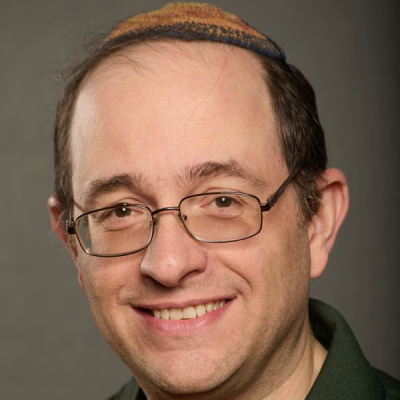
Ordained by the UTJ’s Institute of Traditional Judaism in 2004, Rabbi Noah Gradofsky has remained a steadfast member, serving for years as a member of the UTJ Executive Board, the board of Morashah - UTJ's rabbinic fellowship - and as chairman of the UTJ conference committee.
Rabbi Gradofsky served as a full-time rabbi at Temple Israel in Long Beach, NY, for 6 years and has since served a number of synagogues on a contract basis. He is also a full-time practicing attorney.
Rabbi Gradofsky is also a moderator of the UTJ Facebook group, and he is a prolific writer on Jewish law and sociological topics affecting the religious Jewish community. Among his essays and writings are:
To learn more about Rabbi Gradofsky and access any essays not yet included in Viewpoints, go to: www.e-ark.net
Rabbi Gradofsky is married to Dr. Melissa Klapper and lives in the Philadelphia area.