


by Rabbi Noah Gradofsky
Disclaimer: The opinions expressed here are that of the writer and do not necessarily represent the views of the Union for Traditional Judaism, unless otherwise indicated.
Texts below from Responsa v. 24. Translations my own except as indicated. Links go to Sefaria for easy access to the texts.
Original presentation: Sha’arei Orah Shabbat/Shavuot 2nd day 5786/2026. Gray text skipped in spoken presentation.
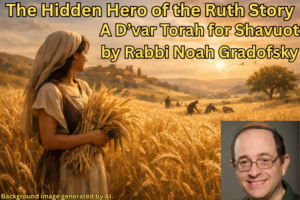
Today we read the Book of Ruth. If I were to ask you whose kindness saves the day in that story, how would you answer? Ruth, who returns from Moav with her mother-in-law despite little chance of realizing any prosperity from that choice? Boaz, who takes a liking to and helps Ruth despite her downtrodden situation and being a foreigner? Na’omi, who helps seal the shidakh (match for marriage)?
Actually, I think that Na’omi, or perhaps the narrator of the Book of Ruth, has someone else in mind. Ruth asks Na’omi where she gleaned, saying “יְהִ֥י מַכִּירֵ֖ךְ בָּר֑וּךְ. – May the one who showed you favor (lit. “recognized you”) be blessed.” (Ruth 2:19). Stopping here, it looks like the credit here is going to Boaz. But is that really the answer? When Ruth tells Na’omi that she was with Boaz, Na’omi realizes that there is a higher power at play in Boaz’s kindness:
וַתֹּ֨אמֶר נָעֳמִ֜י לְכַלָּתָ֗הּ בָּר֥וּךְ הוּא֙ לַה’ אֲשֶׁר֙ לֹא־עָזַ֣ב חַסְדּ֔וֹ אֶת־הַחַיִּ֖ים וְאֶת־הַמֵּתִ֑ים וַתֹּ֧אמֶר לָ֣הּ נָעֳמִ֗י קָר֥וֹב לָ֙נוּ֙ הָאִ֔ישׁ מִֽגֹּאֲלֵ֖נוּ הֽוּא:
Na’omi said to her daughter-in-law, “May he be blessed of God, who has not abandoned his kindness with the living or the dead!” Na’omi further said to her, “That man (Boaz) is kin to us, he is among our redeeming kinsmen[1].” (Ruth 2:20)
This is by no means to say that Boaz doesn’t get any of the credit. He gets plenty of credit, and Na’omi prays “May he be blessed of God.” But I think what the narrator and/or Na’omi is telling us is that ultimately, Boaz is merely a conduit of God’s compassion.
The same point is made in a few other ways. When Boaz first explains to Ruth why Boaz is being kind to Ruth, he asks that she receive full reward from the God of Israel “אֲשֶׁר־בָּ֖את לַחֲס֥וֹת תַּֽחַת־ כְּנָפָֽיו under whose כְּנָפָֽיו, wings, you have sought refuge.” (Ruth 2:12) When Ruth proposes marriage to Boaz, she says “וּפָרַשְׂתָּ֤ כְנָפֶ֙ךָ֙ עַל־אֲמָ֣תְךָ֔ spread כְנָפֶ֙ךָ֙ , your cloak, over your maidservant,” (Ruth 3:9) suggesting that Boaz become the shelter that Ruth has sought from God.[2] Also, when Na’omi first starts to hatch the marriage plot, she says of Boaz, as we mentioned earlier, “בָּר֥וּךְ הוּא֙ לַיקֹוָ֔ק he is blessed of God” (Ruth 2:20) while as he accepts Ruth’s proposal Boaz says, “בְּרוּכָ֨ה אַ֤תְּ לַֽיקֹוָק֙ you are blessed of God” (Ruth 3:10) because you have not gone after younger men, suggesting both that Boaz accepts his role as the manifestation of God’s kindness to Ruth, but also that Ruth is the manifestation of God’s kindness to Boaz.
The same can be said in general when we provide support for those in need. It is the Kadosh Barukh Hu (God) who ultimately takes compassion on those who are in need. We are the delivery system! Sefer Devarim (Deuteronomy) suggests the same:
עֹשֶׂ֛ה מִשְׁפַּ֥ט יָת֖וֹם וְאַלְמָנָ֑ה וְאֹהֵ֣ב גֵּ֔ר לָ֥תֶת ל֖וֹ לֶ֥חֶם וְשִׂמְלָֽה: וַאֲהַבְתֶּ֖ם אֶת־הַגֵּ֑ר כִּֽי־גֵרִ֥ים הֱיִיתֶ֖ם בְּאֶ֥רֶץ מִצְרָֽיִם:
[God] does justice with the orphan and widow and loves the stranger, giving him bread and clothing. So too, you shall love the stranger, for you were strangers in the land of Egypt. (Deut. 10:18-19)
Along with the Book of Ruth, our other scriptural reading for Shavuot is, of course, the story of revelation at Sinai, including the aseret hadibrot (the “Ten Statements,” more colloquially “Ten Commandments”). Here, too, we have a striking suggestion of the partnership between God and humanity. The fourth and fifth of the dibrot (Exodus 20:8-20) tell us, respectively, of remembering Shabbat (the Sabbath) as a commemoration of God’s creation of the world and honoring our parents, who, after all, are the people directly responsible for bringing us into the world.[3] The Babylonian Talmud, Kiddushin 30b notes God’s partnership with mothers and fathers in relationship to the fifth dibrah:
ת”ר, שלשה שותפין הן באדם: הקדוש ברוך הוא, ואביו, ואמו, בזמן שאדם מכבד את אביו ואת אמו, אמר הקדוש ברוך הוא: מעלה אני עליהם כאילו דרתי ביניהם וכבדוני.
The rabbis taught: There are three partners [in the creation] of a person: The Blessed Holy One, his father, and his mother. When a person honors one’s parents, the Blessed Holy One says “I treat you as if I lived among you and you honored me.”
As we head toward the Yizkor service, and remember those who came before us, I’d like to suggest that a critical part the divine-parent partnership is the type of partnership we discussed between God and Boaz and God and Ruth. When all goes right, though not all of us are so blessed, the relationship between parent and child is the pinnacle of love and caring. Parenting is not only a reflection of the Divine through the creative act but also through the nurturing relationship. While we ask God to remember our parents and other loved ones well, perhaps we can reflect on how all the reasons we loved these people are, ultimately, reflections of God’s love for us.
As many of you know, I am currently enjoying reading through Divrei Halev, which provides thoughts on each Torah portion from my teacher Rabbi David Weiss Halivni, of blessed memory, as recorded by my teacher Rabbi Ronald Price. Commenting on the fifth dibrah’s promise of length of days as reward for honoring parents, Rabbi Halivni notes:
It is strange that the Torah says one should honor his or her parents lema’an ya’arihun yamekhah (so that you shall have length of days). Shouldn’t it say, “so that they shall have length of days?” After all, if one cares properly for parents, one is assisting them to live out their lives fully.
Rabbi Halivni explains:
The act of caring for parents, something often far from easy, is an act of giving. And a full life, one with length of days, is one that is rich in giving. (p. 142)
For this point, Rav Halivni points to a midrash about the very verse I started off with. The midrash teaches:
תני בשם ר’ יהושע יותר ממה שבעל הבית עושה עם העני העני עושה עם בעל הבית שכן אמרה רות לנעמי שם האיש אשר עשיתי עמו היום ולא אמרה אשר עשה עמי אלא אשר עשיתי עמו, הרבה פעולות והרבה טובות עשיתי עמו בשביל שהאכילני פרוסה אחת.
It was taught in the name of Rabbi Joshua: More than what the master of the house does for the pauper, the pauper does for the master of the house, for Ruth said to Na’omi, “שם האיש אשר עשיתי עמו היום The name of the person with whom I worked today.” (Ruth 2:19) She did not say “who worked with me,” but rather “with whom I worked,” I did many good things and many kindnesses for him by his merely giving me one slice of bread. (Ruth Rabbah 5:19).
Rabbi Halivni explains:
The ba’al Habayit may give the pauper only a penny, but in accepting it, the pauper allows the homeowner to perform a good act, far more valuable than his small monetary gift.
Acts of kindness, those which we bestow on others, and those which are bestowed on us, represent our partnership in God’s beneficence. Therefore, I would add, the Torah which we celebrate on Shavuot conveys God’s instructions for how to carry out that partnership. In a world where, too often, people claim that they are acting as God’s partners as they assert their authority over others, justify land conquests, and celebrate destruction and suffering, may we all have a part in being the counterexample, living our lives as partners with God in kindness and compassion.
[1] מִֽגֹּאֲלֵ֖נוּ (“redeeming kinsmen”) trans per JPS.
[2] I learned of the similarity of כנפ language from its being highlighted in the article by Prof. Nehama Aschkenasy at https://www.thetorah.com/article/the-book-of-ruth-a-serious-comedy.
[3] Many of the rabbinic teachings surrounding the juxtaposition of our relationship with God and our relationship with our parents revolve around another text which also juxtaposes Shabbat observance with respect for parents, Leviticus 19:3.
Enjoying UTJ Viewpoints?
UTJ relies on your support to promote an open-minded approach to Torah rooted in classical sources and informed by modern scholarship. Please consider making a generous donation to support our efforts.



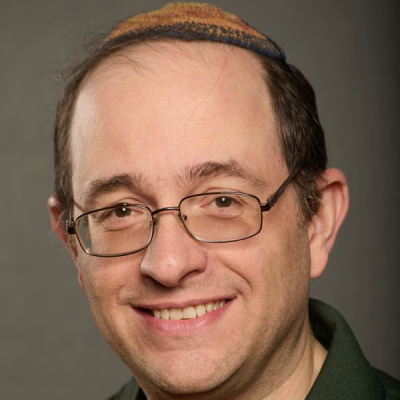
Ordained by the UTJ’s Institute of Traditional Judaism in 2004, Rabbi Noah Gradofsky has remained a steadfast member, serving for years as a member of the UTJ Executive Board, the board of Morashah - UTJ's rabbinic fellowship - and as chairman of the UTJ conference committee.
Rabbi Gradofsky served as a full-time rabbi at Temple Israel in Long Beach, NY, for 6 years and has since served a number of synagogues on a contract basis. He is also a full-time practicing attorney.
Rabbi Gradofsky is also a moderator of the UTJ Facebook group, and he is a prolific writer on Jewish law and sociological topics affecting the religious Jewish community. Among his essays and writings are:
To learn more about Rabbi Gradofsky and access any essays not yet included in Viewpoints, go to: www.e-ark.net
Rabbi Gradofsky is married to Dr. Melissa Klapper and lives in the Philadelphia area.