


by Professor Reuven Kimelman
Disclaimer: The opinions expressed here are that of the writer and do not necessarily represent the views of the Union for Traditional Judaism, unless otherwise indicated.
The following summary was written primarily by Microsoft Copilot and edited by Professor Kimelman.
In this article available here on Academia.edu (free login required for access), Professor Kimelman argues that the story of Eve in Genesis is best understood not as a tale of humanity’s maturation, sexual awakening, or cultural development, but as a profound exploration of the human condition and the tension between divine authority and human self-assertion. He contends that the serpent does not introduce disobedience into Eve’s mind so much as amplify doubts and tendencies already present in her interpretation of God’s command. Through close literary analysis, Kimelman presents Eve as a representative figure for all humanity, with the serpent symbolizing an inner impulse toward autonomy and self-determination. He further argues that the narrative points toward an essentially egalitarian view of man and woman from creation, with later domination emerging as a consequence of human failure rather than a creation ideal. Ultimately, the story illustrates the enduring struggle between human willfulness and divine authority, making Adam and Eve archetypes of Everyman and the Eden narrative a reflection on moral responsibility and the precariousness of displacing divine authority by one’s own. According to Genesis, the threat to morality or God lies not in the increase in human power or length of life but the illusion that one can play God by assuming the divine prerogative of determining what is right and wrong. If humanity is the arbiter of morality, then there are no restraints, allowing Cain, the first fruit of Adam and Eve, in the very next chapter, to arrogate to himself the authority to decide who shall live and who shall die. First Adam and Eve usurped the divine prerogative to determine good and evil, then their first-born son killed his brother.
Enjoying UTJ Viewpoints?
UTJ relies on your support to promote an open-minded approach to Torah rooted in classical sources and informed by modern scholarship. Please consider making a generous donation to support our efforts.



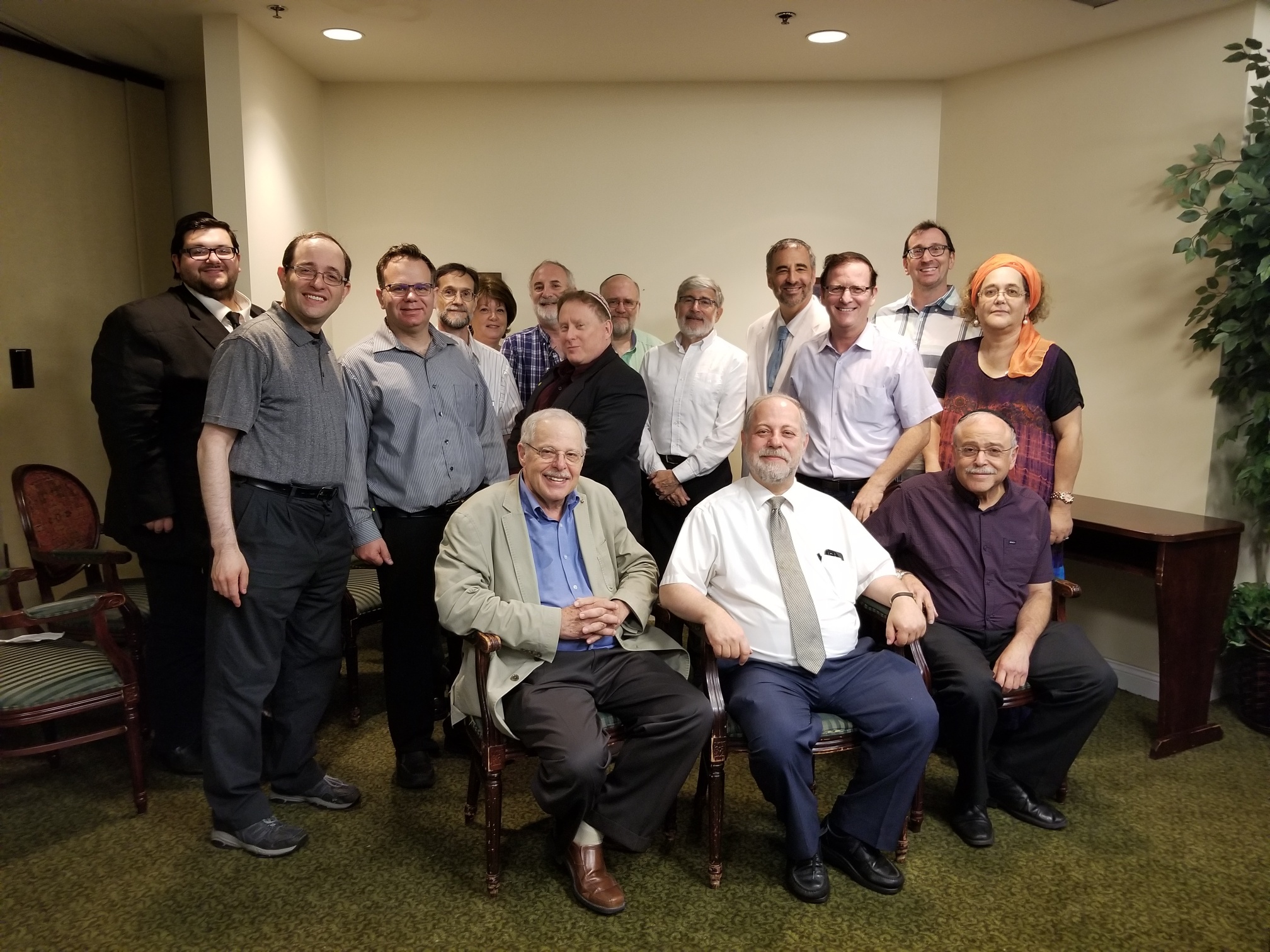







One of the founding members of the UTJ, Reuven Kimelman is a professor of classical rabbinic literature at Brandeis University, specializing in the history and meaning of Jewish liturgy.
Prior, Professor Kimelman was Joseph Shier Distinguished Professor of Jewish Studies at the University of Toronto, and Five College Professor of Judaic Studies at Amherst College.
He also has taught courses at numerous other educational institutions, including: Mt. Holyoke Smith, Trinity and Williams Colleges, as well as the Jewish Theological Seminary of America, Yeshiva University and Hebrew University in Jerusalem.
A recognized scholar of Talmud, Midrash and liturgy, Professor Kimelman has written on the interaction between Judaism and Christianity in antiquity and modernity. His interest further expands to the thematic connections between Greek and Biblical literature from Homer to Plato and from Genesis to Matthew. In the field of Jewish ethics, his focus is on the ethics of war, statecraft, conflict, and genocide.
Professor Kimelman is a prolific writer whose works have been published in scholarly and popular journals. He is author of the Hebrew work, The Mystical Meaning of “Lekhah Dodi’ and ‘Kabbalat Shabbat’ (Hebrew University Press) and the forthcoming, “The Rhetoric of Jewish Prayer: A Historical and Literary Commentary on the Prayerbook.”
He also has authored two audio course books:
He also wrote the introduction to Abraham Joshua Heschel’s The Mystical Element in Judaism. A list of Professor Kimelman's courses and publications can be found here.
Professional Kimelman lectures frequently at academic conferences, synagogues and national Jewish organizations. He has served as scholar in-residence for many groups, including the former UJA Young Leadership Cabinet, the Wexner Heritage Foundation, and the General Assembly of the Jewish Federations of North America.