

by Rabbi Jeffrey Miller
Disclaimer: The opinions expressed here are that of the writer and do not necessarily represent the views of the Union for Traditional Judaism, unless otherwise indicated.
Some people make a very good living naming things. Branding firms charge serious money to come up with the name of a car, a phone, or a pill. Drug makers hire naming consultants, and the FDA vets every proposed drug name for confusion with another.
Ford Motor Company sold the “Pinto” in Brazil before learning that pinto there is slang for a body part unique to males. More recently, a Belgian chocolatier discovered that “Isis” was no longer a good name for … anything.
Chazal would not have been surprised.[1]
| How do we know that a person’s name can shape his destiny? Rabbi Eliezer points to the verse: ‘Come and behold the works of God, who has wrought wonders upon the earth.’ But read the verse differently: not שַׁמּוֹת shammot—‘desolations’—but שֵׁמוֹת shemot—‘names.’ For even in the names we bear, we can discern the hand of God shaping our lives.” | מְנָא לַן דִּשְׁמָא גָּרֵים? אָמַר רַבִּי אֱלִיעֶזֶר, דְּאָמַר קְרָא: ״לְכוּ חֲזוּ מִפְעֲלוֹת ה׳ אֲשֶׁר שָׂם שַׁמּוֹת בָּאָרֶץ״, אַל תִּקְרֵי ״שַׁמּוֹת״ אֶלָּא ״שֵׁמוֹת״ |
A name doesn’t just describe something. It shapes it.
Regular readers know I keep coming back to naming: Adam names the animals, Chava names Kayin, Pharaoh renames Yosef. I don’t go looking for the theme; the Chumash keeps raising it. The one who names holds power, control and dominion over what is named. In a D’var Torah on Naso, I called this the “Rumpelstiltskin Principle.”
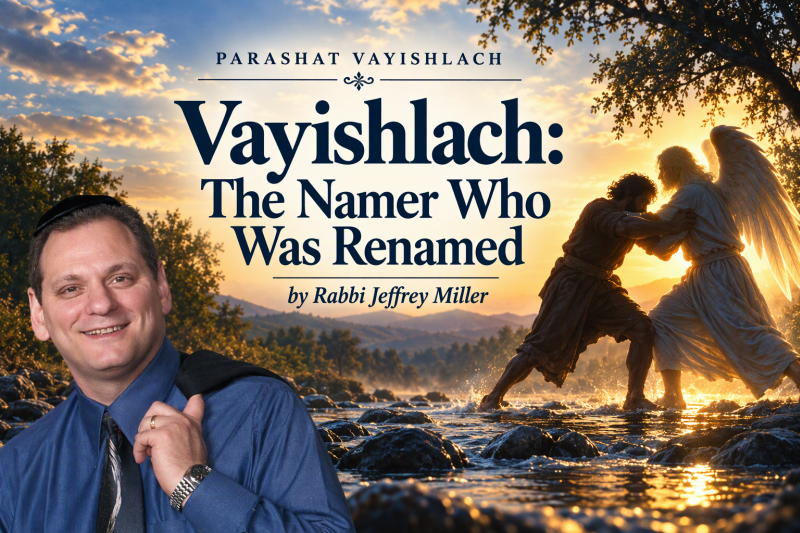
Nowhere is the theme stranger than at the Yabbok, where Yaakov Aveinu wrestles an angel in human form. And while they fight, they argue about … their names.
The angel demands Yaakov’s name, then announces that he will henceforth be Yisrael, for he has struggled with God and man and prevailed. Yaakov demands the angel’s name in turn. The angel refuses, asks why he even asks, and then blesses him. Then Yaakov does some naming of his own: he calls the place Peniel, for he has seen God face to face and lived to tell the tale.[2]
This short passage has puzzled readers for millennia. Why does an angel need to ask Yaakov his name? Why won’t he give his own? Who blessed whom? Let’s look with fresh eyes, setting aside what we think we already know.
An angel doesn’t need to be told who Yaakov is. The question is a demand that Yaakov say aloud the name he has carried since birth. As a baby, he emerged holding his brother’s heel, וַיִּקְרָא שְׁמוֹ יַעֲקֹב, va’yikra shemo Yaakov, “and he called his name Yaakov.”[3] The name was a description: the heel-grabber. To say “Yaakov” is to admit what he has always been.
Then the angel does what namers do: he takes the old name away and bestows a new one. But look at the reason he gives: כִּי־שָׂרִיתָ… וַתּוּכָל, ki sarita… va’tuchal, “you have striven, and you have prevailed.” In the same breath, he admits he could not beat Yaakov; the Torah has already told us that the angel “saw that he could not prevail against him.”[4] The match ends in a draw.
Yaakov follows suit. If naming means dominion, and the match was a draw, turnabout is fair play. He wants the angel’s name, which, as Rumpelstiltskin taught us, is nearly the same as naming him.
The angel refuses: לָמָּה זֶּה תִּשְׁאַל לִשְׁמִי, lamah zeh tishal lishmi, “why is it that you ask my name?” In Naso, we followed Rashi’s explanation; angels’ names change with their missions. With fresh eyes, however, the refusal is simpler. The angel will grant a draw, but he will not be mastered.
Now the pronouns get slippery, a common problem in Torah and an invitation to interpretation. וַיְבָרֶךְ אֹתוֹ שָׁם, Va’yevarech oto sham, “and he blessed him there.” The usual reading is that the angel finally gives Yaakov the blessing he demanded at dawn: “I will not let you go unless you bless me.” [5]
Let me suggest a different reading of this “Thriller by the River,”[6] using Rabbi Eliezer’s technique from the Gemara above: the same letters, vocalized differently.
The word written without vowels, שם, can be read as שָׁם, sham, “there,” or שֵׁם, shem, “a name.” The angel refused to disclose his name, so Yaakov bestows one of his own choosing. He may not learn the angel’s Divinely given name, but he has earned enough in the match to give one himself.
וַיִּקְרָא יַעֲקֹב שֵׁם הַמָּקוֹם פְּנִיאֵל
va’yikra Yaakov shem ha-makom Peniel.
Yaakov named the angel Peniel
Readers of Hebrew will surely object to my translation. הַמָּקוֹם, after all, means “the place.” The verse is generally read: Yaakov named the place [where he fought God’s messenger] Peniel.”
Or did he.
הַמָּקוֹם, HaMakom, is polysemous, denoting not only a physical place but also the Divine. Indeed, Chazal draw the connection from Yaakov himself, in last week’s parsha, when he “encountered the place”[7] on his way to Charan: God is called Makom because He is the place of the world, and the world is not His place.[8] Hear HaMakom as Chazal heard it, and Yaakov is no longer naming the site of an encounter. He is giving a name to the One he encountered there.
Pause on how audacious that is. Naming a place, a creature, or a child is one thing; there, the namer stands above what is named.
Naming the Divine is something else entirely. God’s Name is given by Him, not to Him. At the burning bush, Moshe asks for it and is told אֶהְיֶה אֲשֶׁר אֶהְיֶה, Ehyeh asher Ehyeh, an answer that is mostly a refusal. We are so hesitant to say it aloud that we call God הַשֵּׁם, HaShem, “the Name,” and alter a letter here and there so we never quite utter it. Or even write it casually.
Yaakov Aveinu could not possibly have named God as an act of dominion. It can only be an act of recognition: this is who You are to me, here, tonight.
As we once read the Midrash of the burning bush, the real question is not “What is My name?” but “What are you going to call Me?” Hagar answered first, calling God קל רֳאִי, El Ro’i, the God who sees me.[9] Hagar names the God who saw her; Yaakov names the God whom he saw. Both name Him for an encounter they did not expect to survive.
Yaakov is the Torah’s great namer. Here, he calls God פְּנִיאֵל, Peni-El, the God I met face to face. After his first night encounter he renamed Luz Beit El,[10] in nearly the same words used here: וַיִּקְרָא אֶת־שֵׁם־הַמָּקוֹם הַהוּא, va’yikra et shem ha-makom ha-hu. After Peniel comes an altar he calls קל אֱלֹקי יִשְׂרָאֵל, El Elohei Yisrael,[11] a name for God built from Yaakov’s own new name.
Nor is Yaakov finished naming. Within a few chapters, he will overrule his dying wife:
| And it came to pass, as her soul was departing, for she was dying, that she called his name Ben-Oni; but his father called him Binyamin. [12] | וַיְהִ֞י בְּצֵ֤את נַפְשָׁהּ֙ כִּ֣י מֵ֔תָה וַתִּקְרָ֥א שְׁמ֖וֹ בֶּן־אוֹנִ֑י וְאָבִ֖יו קָֽרָא־ל֥וֹ בִנְיָמִֽין׃
|
Rachel once cried to Yaakov, “Give me children, or I am dead.”[13] Now her second son, Yaakov’s thirteenth child, is killing her. With her last breath she names him בֶּן־אוֹנִי, Ben-Oni, “son of my sorrow.” It is a name born of pain.
Yaakov won’t allow it. וְאָבִיו קָרָא־לוֹ בִנְיָמִין, V’aviv kara lo Binyamin, “but his father called him Binyamin.” The father overrides the mother.
Why? Look at what the new name holds. בִּנְיָמִין, Binyamin, is “son of the right hand”: the hand you lean on, the hand you take hold of. The word אוֹן, on, can mean strength as well as sorrow, so Yaakov kept the sound of Rachel’s name and turned its meaning from pain to strength.[14] Rachel’s son would not carry Rachel’s death for the rest of his life.
The Torah doesn’t say whether Rachel knew of the name change. בְּצֵאת נַפְשָׁהּ, B’tzeit nafshah; perhaps she was already gone. Whatever else moved Yaakov, he would not let his newborn bear his mother’s epitaph. Nor is Rachel’s name erased: the Torah records it first and leaves it standing. It simply isn’t imposed on the child.
Return to the Yabbok. Yaakov was injured there; he limped for the rest of his life.[15] He could have named the place for the wound. Instead, he named it Peniel: I saw God face to face, and my life was spared. He named it for the encounter, not the injury; for surviving, not for what it nearly cost him.
He had come to the Yabbok afraid: וַיִּירָא יַעֲקֹב מְאֹד וַיֵּצֶר לוֹ, va’yira Yaakov me’od va’yetzer lo, “Yaakov was very frightened and distressed”.[16] He left limping into the sunrise,[17] weaker in body but stronger in spirit. That was exactly the right state for meeting Esav.
A limping man is no threat; Esav sees no warrior to fight. And Yaakov, who the night before had divided his camp for disaster, now וְהוּא עָבַר לִפְנֵיהֶם, va’hu avar lifneihem, “went ahead of them”.[18] The frightened Yaakov had planned for retreat. Yisrael steps forward.
Then Yaakov tells his brother: כִּי עַל־כֵּן רָאִיתִי פָנֶיךָ כִּרְאֹת פְּנֵי אֱלֹקִים, ki al ken ra’iti fanecha kir’ot penei Elokim, “for I have seen your face as one sees the face of God”.[19] Hours after Peniel, he sees Peniel again, this time in the face of the brother he feared would kill him. He survived the first face, and that taught him how to look at the second.
It is the same choice he makes at Rachel’s deathbed: she names the child for the pain; he names him for hope. The man who came into the world clutching a heel now stands up and chooses what to call things.
We rarely get to name God, and never to master Him. But we name our own experiences all the time. We decide whether a hard night becomes the place where we were wounded or the place where we saw God’s face and lived.
The angel would not tell Yaakov his name. But Yaakov came away with something better: the understanding that he could not always choose what happened to him, but he could choose what to call it.
Yaakov teaches us that fear is most powerful when it remains nameless, lurking in the shadows. Naming it brings it into the light, where we can recognize, confront, and overcome it.
Only then can we move forward.
Shabbat Shalom!
[2]. Gen. 32: 28-31.
[6]. For those counting, this is the second thing I’ve named in this D’var Torah.
[14] Ramban to Genesis 35:18 discusses the double meaning of און (on), which can signify sorrow or strength; compare his treatment of Rachel’s Ben-Oni and Yaakov’s Binyamin.
Enjoying UTJ Viewpoints?
UTJ relies on your support to promote an open-minded approach to Torah rooted in classical sources and informed by modern scholarship. Please consider making a generous donation to support our efforts.



Rabbi Jeffrey H. Miller earned a Master’s degree in Jewish History and S'micha (rabbinical ordination) from Yeshiva University in 1988. He then served as the rabbi of Congregation Sons of Israel (Manalapan, NJ; 1988-1991) and Marathon Jewish Center (Douglaston, NY; 1991-1998). In 1998, Rabbi Miller graduated from St. John’s University School of Law and began practicing law full time. Rabbi Miller has served as a legal advisor to the Union for Traditional Judaism and its rabbinical arm, Morasha. He has lectured on a wide array of topics concerning the intersection of secular law and the rabbinate. In February 2017, Jeffrey was accepted to serve on the American Arbitrtaion Association’s panel of commercial arbitrators. Rabbi Miller has been married to Enid (they met as counselors on USY Wheels) since 1985, and they are the proud parents of Rabbi Avi (and Sarah) Miller, and grandparents of Samson, Avika and Rafi.
For more information about Rabbi Miller, including links to some of his published articles, visit him at his website at www.millerlawofficespllc.com.